
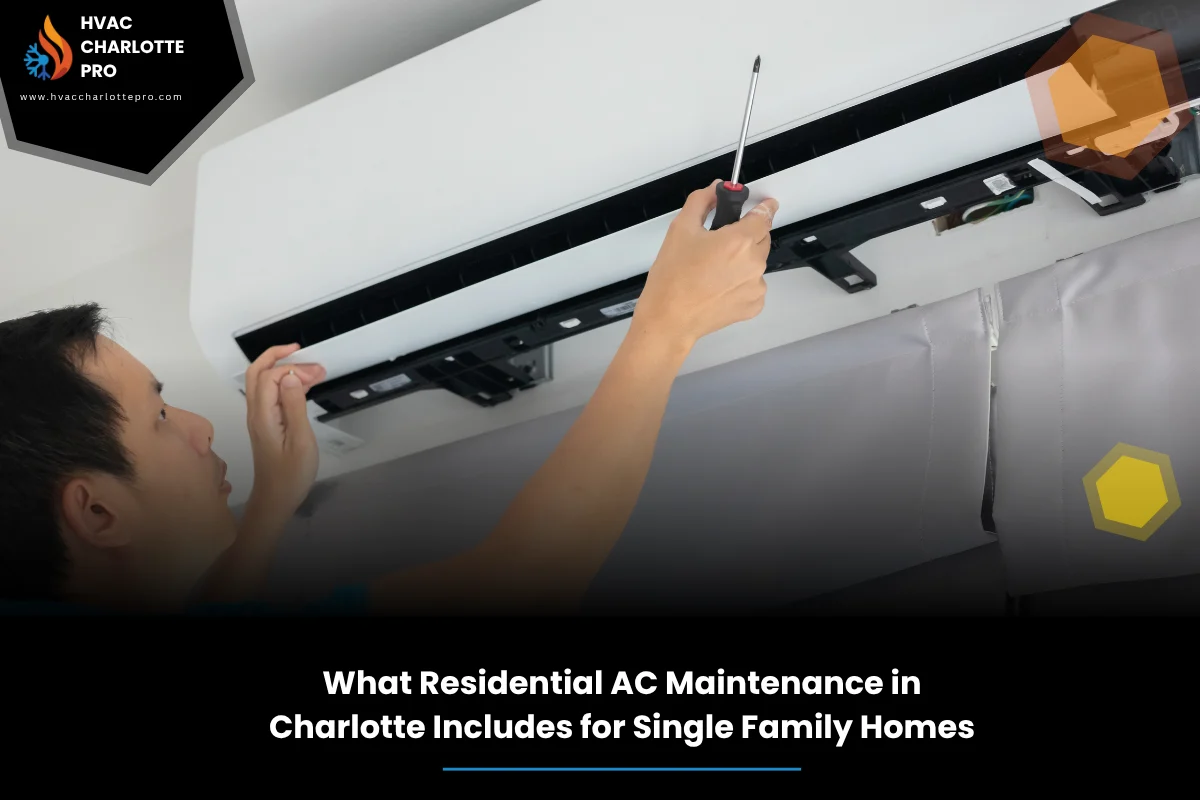
Single family homes rely on steady cooling to keep life simple on hot days. A well-timed visit covers much more than a quick rinse. It checks airflow, safety parts, and energy use, so your system stays steady when summer hits. That is the heart of residential AC maintenance in Charlotte and why it matters for comfort and bills.
HVAC Charlotte Pro takes a practical approach: inspect, clean, test, and explain. If you want a clear scope of what a visit includes, this guide breaks it down by task, timing, and what you can do yourself. For details on scheduling or scope, see residential AC maintenance in Charlotte and use it as a reference as you plan the season.
Table of Contents
Quick Summary
Routine maintenance for single family homes focuses on five areas: controls and thermostat, airflow and filter, coils and refrigerant, electrical and safety, and drainage and cleanliness. A standard visit will confirm thermostat accuracy, check temperature split, inspect and replace filters as needed, clean the condenser coil, verify refrigerant levels, and test key electrical parts like capacitors and contactors.
It also clears the condensate drain, inspects blower components, tightens wire connections, and looks for wear that can cause mid-season breakdowns. You can expect clear notes, a simple report, and tips you can act on today. For an even deeper walk-through of seasonal care in our area, the complete guide to AC maintenance in Charlotte provides broader context and planning ideas you can reuse each year.
What Maintenance Includes for Single Family Homes
At a high level, a technician reviews the system end to end, then corrects small issues before they grow. For a fuller primer with context on local climate and timing, see the Complete Guide to AC Maintenance in Charlotte NC for Reliable Home Comfort. The goal is simple: keep the unit running safely, quietly, and within the range the manufacturer intended.
Inside, maintenance will include thermostat calibration, verification of system modes, and a reading of the temperature drop across the coil. The blower, wheel, and housing get a visual check, and the air filter is inspected and replaced if needed. Duct connections and returns get a quick look, especially near the air handler, to flag air leaks that waste energy.
Outside, the tech performs condenser coil cleaning, straightens bent fins where practical, and confirms the fan motor is drawing normal current. They will read refrigerant pressures and temperatures to see if the system is in a healthy range. Electrical parts like the capacitor and contactor are tested, and wiring is tightened to prevent heat buildup.
The AC Maintenance Checklist for Single Family Homes
A clear AC maintenance checklist helps you track what was done and what needs follow-up. Use this list to compare notes after each visit and to plan simple monthly tasks you can do between seasons.
- Filter replacement: confirm size, MERV rating, and schedule for changes
- Thermostat settings: check accuracy and programming basics
- Airflow check: verify returns are clear and registers open
- Coil care: rinse outdoor coil; inspect indoor coil for dirt buildup
- Refrigerant review: confirm readings are within normal ranges
- Electrical test: inspect capacitor, contactor, fuses, and wiring
- Drain cleaning: clear trap, rinse line, and test float switch
- Blower inspection: look for dust on wheel and signs of imbalance
- Safety controls: verify high- and low-pressure switches respond
- Report and notes: list findings, parts within spec, and next steps
AC Tune Up vs Inspection: What’s the Difference?
People often use the terms swap, but they are not the same. An AC inspection checks condition and safety items. It verifies readings, looks for wear, and documents findings. An AC tune up adds cleaning and adjustments to improve performance, like coil rinsing, tightening connections, and small corrections that help the system breathe and cool better.
If you schedule an AC tune up in Charlotte before summer, expect more hands-on work that targets efficiency. If your system is newer or just had service, an inspection may be enough to confirm it is still on track. Many homeowners choose preventative AC maintenance in Charlotte that blends both: a full check with essential cleaning so comfort stays steady through heat waves.
Homeowner Tasks vs Pro Tasks
Some tasks are perfect for homeowners. Others need gauges, meters, and safety training. Use this simple table to see where each task fits best for a single family home.
| Task | Homeowner | Pro | Notes |
|---|---|---|---|
| Filter changes | Yes | As needed | Monthly check; replace per schedule |
| Thermostat checks | Yes | Yes | Basic programming vs calibration |
| Outdoor coil rinse | Yes | Yes | Gentle water only; no pressure washer |
| Refrigerant testing | No | Yes | Requires gauges and training |
| Electrical testing | No | Yes | Live circuits; safety risk |
| Drain line cleaning | Sometimes | Yes | Homeowners can add vinegar; pros clear clogs |
| Blower cleaning | No | Yes | Wheel removal and balancing |
| Duct leak check | No | Yes | Requires pressure test for accuracy |
Seasonal Timing and Frequency
Book preventative AC maintenance once a year, ideally in spring before steady heat arrives. In older homes, mid-season filter checks help hold airflow steady. If the system runs long hours or the home has pets or recent projects, add a fall check to prepare for shoulder-season humidity and keep drains clean.
According to U.S. Department of Energy (2023), replacing a dirty AC filter can lower energy use by 5 to 15 percent. That small step protects the system and keeps cooling costs in check. Energy Saver: Maintaining Your Air Conditioner
For climate-specific planning and a deeper seasonal plan, the complete guide to AC maintenance in Charlotte outlines timing ideas you can adapt to your household. Pair that with your own calendar reminders and you will stay ahead of peak demand.
5-Step Framework: Single-Family AC Care You Can Stick To
Use this simple plan to keep your system steady all year. It pairs basic homeowner moves with pro care at the right time. If you want a full seasonal walk-through, bookmark the complete guide on this topic for reference.
- Monthly filter check: Inspect, note the date, and replace when dirty.
- Quarterly outdoor sweep: Clear leaves and trim plants 2 feet from the unit.
- Spring pro visit: Book a full check with coil cleaning, electrical testing, and refrigerant review.
- Mid-summer sanity check: Confirm strong airflow and normal run times.
- Fall drain and blower check: Keep moisture and dust from stacking up.
Write these steps on a fridge card or in your phone. Simple habits beat complex plans. With a trackable routine, you avoid surprise breakdowns and keep comfort steady without overthinking it.
Common Issues Found During Maintenance
Most problems start small. A weak capacitor can make the condenser fan slow to start. Dirt on the indoor coil can lower airflow and make the compressor work harder. A partially clogged drain line can trip the float switch and stop cooling on the hottest day.
Loose wires show up as heat marks at terminals. A worn contactor can pit and stick, causing short cycling. Low airflow from a dense or clogged filter can freeze the coil and send water where it does not belong. A steady maintenance routine catches these early and keeps repairs simple.
Comfort, Air Quality, and Efficiency
Maintenance helps more than just cold air. A clean system maintains steady humidity and keeps dust from recirculating. Timely filter changes and a clean blower reduce particles in living spaces, which can help sensitive family members breathe easier.
Good airflow also supports even temperatures between rooms. If some rooms lag, ask for a quick airflow assessment during your next visit. Small adjustments like opening closed returns, sealing obvious leaks near the air handler, or moving to the right filter type can make a clear difference without major duct work.
What Not to Expect From a Maintenance Visit
A yearly visit does not rebuild the system or fix major duct design issues. It will not double your efficiency or remove every spot of dust in long duct runs. It also is not a full diagnostic for complex control problems, though it can flag the need for a deeper look.
Think of maintenance as risk reduction and efficiency preservation. It keeps parts within spec, cleans what gets dirty first, and confirms safe operation. If a larger repair is needed, your report should explain options clearly so you can decide on timing and scope.
FAQ
- What is included in a standard maintenance visit?
Expect thermostat checks, filter review, outdoor coil cleaning, refrigerant readings, electrical testing, drain line clearing, blower inspection, and a written report with notes.
- How often should I service my AC?
Once a year works for most homes. If your system runs hard, add a light fall check or at least an extra filter change to hold airflow steady.
- Is an AC tune up different from an inspection?
Yes. An inspection verifies condition and safety. A tune up adds hands-on cleaning and adjustments to improve performance.
- Can I clean the outdoor unit myself?
You can gently rinse the coil with a garden hose and keep plants away. Avoid pressure washers and harsh chemicals that can bend fins or push dirt deeper.
- Do I need refrigerant every year?
No. Refrigerant is not a consumable. If levels drop, there may be a leak that needs testing and repair before adding more.
- Why does the drain line clog?
Warm air plus a cool coil creates water and algae growth. Over time, this builds in the trap and line. Regular cleaning reduces clogs and float switch trips.
- Which filter should I use?
Use the size your return needs and a MERV rating that balances air quality with airflow. If airflow is low, drop to a less restrictive filter and change it more often.
- Will maintenance lower my bills?
It helps the system run as designed, which can reduce waste from dirt, poor airflow, or failing parts. Results vary by starting condition and home use.
- How long does a visit take?
Plan for about an hour, sometimes longer if the unit is very dirty or access is tight. Your report should show what was done and any follow-ups.
Conclusion
Now you know what residential AC maintenance in Charlotte really includes for a single family home: careful checks, focused cleaning, and smart adjustments that keep comfort steady and costs in line. A clear checklist, steady timing, and simple habits at home do most of the heavy lifting.
When you need a pro review, look for clear testing, notes you can understand, and practical next steps that fit your home. If you want help planning your next visit or reading a past report, contact HVAC Charlotte Pro for expert assistance. Use the guide above to prepare, ask better questions, and keep your AC ready for the hottest days ahead.
continue reading
Related Posts
Townhome-friendly residential AC maintenance in Charlotte: a simple checklist, seasonal rhythm, humidity control, and shared-wall tips to keep comfort steady and quiet.
Learn apartment and condo central air maintenance in Charlotte. Get seasonal checklists, humidity tips, a 6-point framework, and DIY vs pro tasks to fix uneven cooling fast.
See how annual AC maintenance plans in Charlotte support senior living facilities with steady comfort, humidity control, and fewer surprises. A simple framework, smart upgrades, and clear logs keep residents safe and calm.