
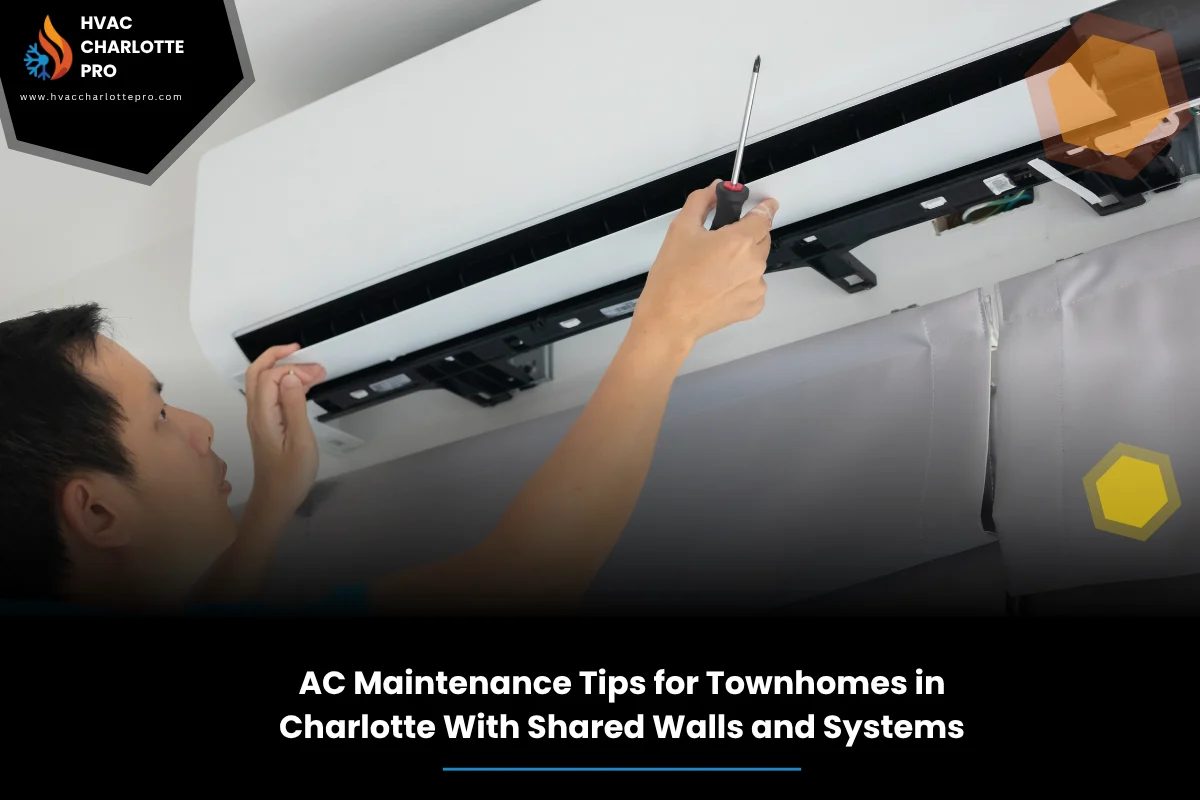
Townhomes live a little different. Shared walls, tight mechanical closets, and neighbor-to-neighbor airflow make AC care more than swapping a filter. If you want steady comfort and low noise without surprise leaks, you need a plan that fits common walls and common lines. In short, smart residential AC maintenance in Charlotte keeps townhomes comfortable without stepping on anyone’s toes.
HVAC Charlotte Pro serves homes and small buildings around the city, so we see what works in connected layouts. In this guide, we’ll break down a practical approach tailored to townhomes: what to check, how to manage humidity, and where shared parts demand extra care. If you prefer a done-for-you schedule and visits, explore residential AC maintenance in Charlotte to keep your system on track.
Table of Contents
Quick Summary
Townhomes need AC care that respects shared walls, tight spaces, and sometimes shared lines. Start with a simple AC maintenance checklist: change filters, clear the condensate line, keep coils clean, and check for vibration and noise. Add a seasonal rhythm to match Charlotte’s humid months. Watch humidity, seal gaps, and keep outdoor units clear.
Know what’s yours versus what the HOA might cover. Document everything, and set up a repeatable schedule. If your system ties into shared drains or sits near a neighbor’s bedroom wall, take extra steps to reduce noise and leaks. Use the framework below to build a routine that fits your layout and sticks through summer.
Why Townhome AC Care Is Different
Shared walls change airflow, sound, and access. Even small things, like a slightly loose panel, can carry noise next door. That’s why a townhome plan needs attention on vibration control, line routing, and condensate drains. For broader upkeep ideas, see the Complete Guide to AC Maintenance in Charlotte NC for Reliable Home Comfort for deeper context.
A townhome also squeezes equipment into closets and balconies. That tight space traps dust and moisture. Regular checks on the condensate drain and coil cleanliness help stop odors and leaks that can travel between units.
A Townhome AC Maintenance Checklist That Fits Real Life
Use this simple list as your repeatable plan. It’s the backbone of effective HVAC maintenance in Charlotte NC for townhomes.
- Change return filters every 1 to 2 months during heavy use. Mark it on your phone.
- Inspect and clear the condensate line; add a cleanout tee if you have room.
- Vacuum return grilles and wipe supply registers so dust does not recirculate.
- Check coil surfaces and gently clean if accessible; keep fins straight.
- Tighten access panels and mounting screws to cut vibration transfer.
- Trim plants around the outdoor unit; keep 2 to 3 feet of clearance.
- Listen for rattles, grinding, or hissing; track new noises with short notes.
- Test the float safety switch if installed; confirm it shuts the system off when tripped.
According to the U.S. Department of Energy, routinely replacing or cleaning AC filters can improve efficiency and protect coils and fans (U.S. Department of Energy, n.d.). Maintaining Your Air Conditioner
Seasonal AC Maintenance in Charlotte: What To Do Spring Through Fall
Charlotte summers run long and sticky, so timing matters. In spring, do a seasonal tune-up before heat ramps up. Check refrigerant sight issues, drain function, and thermostat settings. In summer, tighten filter changes and watch for algae in the drain. In early fall, clean coils again to shake off pollen and dust.
Plan your seasonal AC maintenance in Charlotte around humidity streaks. Add supply vent checks to be sure airflow still reaches upper floors. If your townhome has a finished attic or a top-floor return, make sure insulation around ducts is snug. The complete guide to AC maintenance in Charlotte NC also reinforces this rhythm for dependable comfort across the year.
Humidity and Condensation: Protecting Shared Structures
Humidity is the silent troublemaker in connected homes. Too high and you get musty smells and sweating ducts; too low and you feel clammy air with poor cooling. Target 45% to 55% relative humidity indoors. A smart thermostat with humidity control, or a dehumidification mode on your system, helps steady the numbers.
Keep condensate moving. If your line ties into a shared drain, make sure it has a trap and slope, plus an easy way to flush. Consider a secondary drain pan with a float switch under indoor coils.
Townhome Responsibilities: HOA, Shared Components, and Access
Know what belongs to you and what the HOA handles. Your system may sit on a balcony or in a closet you own, but drains or chases could run through shared spaces. Keep records of any changes to lines or mounting pads. When in doubt, ask before you move or reroute anything tied to common areas.
| Component | Typical Responsibility | Best Action |
|---|---|---|
| Indoor air handler | Homeowner | Follow a steady maintenance schedule; keep panels tight and filter fresh. |
| Outdoor condenser on private pad | Homeowner | Keep clear space; level the pad; dampen vibration near shared walls. |
| Shared drain lines or chases | Varies by HOA | Document routing; install cleanouts; coordinate access with neighbors. |
| Exterior finishes around lines | HOA or shared | Use approved sealants; avoid cutting siding without permission. |
Treat access like a plan, not a guess. Give neighbors a heads-up for any service that might affect shared areas, and save photos of line routes and shutoffs. This simple documentation avoids confusion and helps any tech work faster on your HVAC system.
Framework: 7-Step Plan for Townhome AC Care
Use this step-by-step framework to keep comfort steady without friction. It pairs well with the complete guide on this topic that expands general tasks into a full-year rhythm: the complete guide on this topic.
- Map your system. Note air handler, condenser, drains, and any shared chases. Label the shutoff and cleanout.
- Set cycles. Put filter, drain, and coil touchpoints on your calendar by month and season.
- Control humidity. Target 45% to 55% RH. Use longer, lower fan speeds or a dedicated dehumidifier if needed.
- Quiet the unit. Add neoprene pads or shims under the air handler and check for loose panels.
- Clear the outside. Keep shrubs back and air paths open around the condenser.
- Record checks. Keep a simple log with dates, notes, and photos for faster troubleshooting.
- Review yearly. Compare energy bills and room temps. Update your plan after each summer.
When to Call a Pro vs DIY
Handle basics yourself: filters, drain flushes, register cleaning, and gentle coil care. Call a pro when you see ice on lines, frequent float trips, breaker issues, or uneven cooling by floor. In townhomes, line leaks or slab vibration can spread trouble, so quick fixes matter. A routine professional tune-up before summer is smart insurance.
Complex work like refrigerant handling, control board faults, or duct balancing across floors needs proper tools and training. If your system connects to shared drains or passes through neighbor space, coordinate visits to avoid surprises. Align this with your broader seasonal AC maintenance in Charlotte plan for smooth, quiet operation.
Frequently Asked Questions
- How often should I change filters in a townhome AC?
- What is the best AC maintenance checklist for a small mechanical closet?
- How do I prevent algae in the condensate line?
- Do I need seasonal AC maintenance in Charlotte if my unit is new?
- What humidity level should I aim for in summer?
- Can vibration from my air handler bother a neighbor?
- Who handles repairs to shared drains in my townhome?
- What signs mean I should call a pro right away?
During heavy summer use, check monthly and change every 1 to 2 months. Dusty halls, pets, or construction nearby can shorten that cycle.
Keep it simple: filter, condensate line flush, coil surface check, panel screws, and a noise check. Log each visit so you catch patterns early.
Install a cleanout tee and trap, then flush with water regularly. A few drops of approved condensate tablets in the pan can slow growth.
Yes. New systems still collect dust and face humidity swings. A light seasonal routine keeps efficiency up and protects warranties.
Target 45% to 55% RH. If your system struggles, try longer, lower fan runs or a dedicated dehumidification mode.
Yes, especially through shared framing. Tighten panels and add pads under the unit to cut transfer.
It varies by HOA rules. Check your documents and coordinate with property management before any changes.
Ice on refrigerant lines, repeated float switch trips, burning smells, breaker trips, or sudden hot-cold swings across floors.
Conclusion
Townhomes need AC care that respects neighbors and shared parts. A steady routine for filters, drains, coils, and vibration goes a long way. Build a calendar, document changes, and match your plan to Charlotte’s long humid season. With focused residential AC maintenance in Charlotte, you get quiet comfort, fewer leaks, and airflow that reaches every floor.
Use the framework above along with a broader complete guide to AC maintenance in Charlotte NC to keep your system running strong. If you hit issues beyond DIY, or just want steady upkeep without the guesswork, contact HVAC Charlotte Pro for expert assistance. Your townhome will feel calmer, drier, and cooler all summer.
continue reading
Related Posts
Learn apartment and condo central air maintenance in Charlotte. Get seasonal checklists, humidity tips, a 6-point framework, and DIY vs pro tasks to fix uneven cooling fast.
See how annual AC maintenance plans in Charlotte support senior living facilities with steady comfort, humidity control, and fewer surprises. A simple framework, smart upgrades, and clear logs keep residents safe and calm.
See what residential AC maintenance in Charlotte covers for single family homes. Get a clear checklist, tune up vs inspection differences, and a simple care plan.